Skip the Algorithm: Why Teaching Each Other Is the Best Kept Secret in Hobby Learning
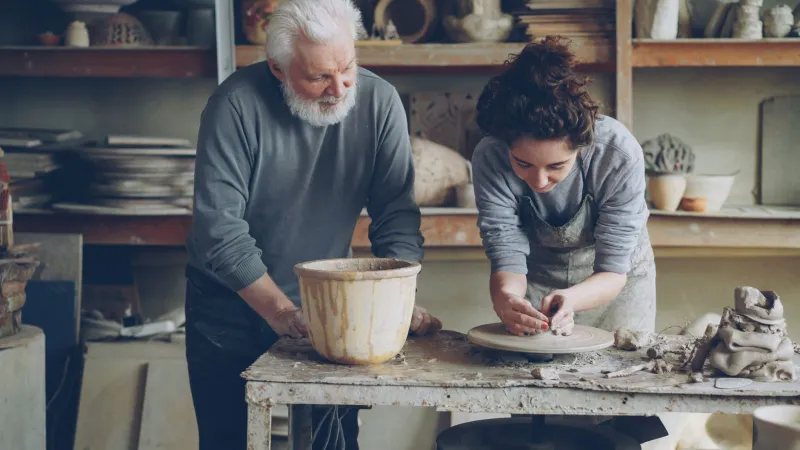
Somewhere in Portland, Oregon, a ceramics teacher named Dana is learning how to set up a basic woodworking jig from her neighbor, a retired contractor named Phil. In exchange, Phil is finally figuring out how to center clay on a wheel — something he's wanted to try for years but never had a reason to pursue. Neither of them watched a single tutorial to make this happen. They just showed up, made a lot of mistakes together, and laughed about it over coffee afterward.
This kind of informal skill swap is happening all over the country, quietly and without much fanfare. And according to the people doing it, it's one of the most effective — and honestly most fun — ways to level up at something new.
What a Hobby Swap Actually Looks Like
The mechanics are pretty simple. Two people with different skill sets agree to teach each other something. A guitarist shows a bassist some fingerpicking techniques; the bassist breaks down music theory in return. A home baker trades sourdough tips with a neighbor who knows how to grow herbs. A knitter and a seamstress swap pattern knowledge.
These exchanges can be one-time meetups or ongoing arrangements. Some happen between close friends, others between near-strangers who connected through a local Facebook group or a subreddit. The format is loose by design — no curriculum, no grading, no pressure to hit specific milestones.
What makes it work is exactly what makes it feel low-stakes: the other person isn't an expert who's been teaching for twenty years. They're just someone who's genuinely good at one thing and genuinely curious about yours.
Why Human Teachers Beat Digital Ones (Even Really Good Digital Ones)
Let's be honest — YouTube has some incredible content. There are tutorials out there that are legitimately well-produced, detailed, and free. So why would anyone trade that for a neighbor who might not even know the technical vocabulary for what they're teaching?
The answer comes down to feedback.
When you watch a video, you're absorbing information in one direction. You can pause, rewind, and rewatch — but the video can't see your hands. It can't tell you that you're gripping the tool wrong, or that the reason your clay keeps collapsing is a tension issue, not a water issue. A real person standing next to you can catch those things in real time, often before you've even noticed something is off.
There's also the question of pacing. Online tutorials are edited for a general audience, which means they're often either too fast for beginners or too slow for people with some background. A peer teacher calibrates naturally to you — speeding up when you're getting it, slowing down when you're not, taking detours when something interesting comes up.
And then there's the psychological piece. Learning from someone you have a real relationship with — even a brand-new one — carries a different kind of accountability and warmth. You don't want to let them down. You also feel more comfortable asking what might feel like a dumb question.
The Creative Wildcard Nobody Talks About
Here's something that doesn't come up enough in conversations about peer learning: the unexpected creative collisions.
When two people from different hobby backgrounds spend time together, they start cross-pollinating ideas. A woodworker teaching a painter about grain direction might spark a whole new way the painter thinks about texture. A photographer showing a quilter how to think about composition might change how that person arranges fabric patterns.
These aren't insights you'd find in any tutorial because they exist in the overlap between two disciplines — a space that only opens up when two humans with different knowledge sets actually sit down together.
Dana, the ceramics teacher from Portland, says Phil's approach to joinery completely changed how she thinks about attaching clay handles to mugs. "He kept talking about how wood wants to move in certain directions," she says. "And I started thinking — clay does that too. I'd just never framed it that way."
How to Find Your Swap Partner
If you're sold on the idea but not sure where to start, the good news is that the infrastructure for this kind of thing already exists — it's just scattered.
Local hobby groups and maker spaces are probably your best bet. Most cities have at least one community workshop, pottery studio, or makerspace where people with varied skills hang out regularly. Strike up a conversation. Ask what someone's working on. Mention what you do. You'd be surprised how quickly a casual chat turns into "hey, want to trade sometime?"
Online community boards — particularly subreddits dedicated to specific hobbies, or local Facebook groups — are another solid option. A simple post along the lines of "I can teach X, looking to learn Y" tends to get a warm response.
Nextdoor is genuinely underrated for this. Your neighbors have skills you don't know about, and many of them are looking for exactly the kind of low-pressure social interaction a skill swap provides.
The main thing is to keep it casual, at least at first. Suggest a single session with no commitment. Meet somewhere comfortable — a home workshop, a shared studio, even a park if the hobby allows for it.
What You're Really Getting Out of This
Beyond the skill itself, hobby swaps tend to produce something that's harder to quantify but maybe more valuable: a real connection.
In a world where most of our social interactions are mediated by screens, sitting across from another person and learning something together is a surprisingly powerful experience. You're vulnerable in the same way — neither of you knows everything, both of you are trying. That shared awkwardness is actually the foundation of genuine friendship.
The hobbyist community has always been good at this, honestly. The best hobby spaces and clubs have always been about people as much as the craft itself. The skill swap is just a more intentional version of what's been happening organically in workshops and studios for decades.
So the next time you're about to open a new tutorial tab, consider this instead: who do you know — or who could you meet — who's already doing the thing you want to learn? Reach out. Offer something in return. See what happens.
You might just learn something the algorithm never could have taught you.