What Happens When Your Hobby Group Is Your Whole Social World
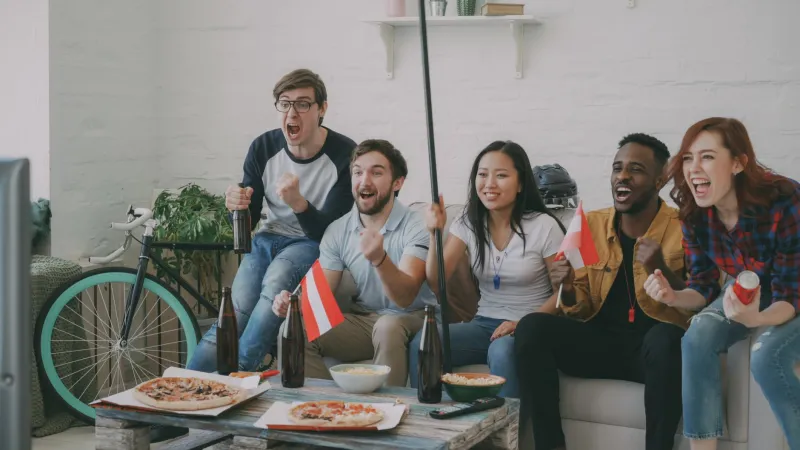
The Best Friend You Made Over a Shared Obsession
There's a particular kind of friendship that forms inside hobby communities. It's fast, it's warm, and it feels almost inexplicably close. You meet someone at a board game night, or in a quilting circle, or at a local running club, and within a few weeks you're texting constantly, sharing inside jokes, and wondering how you ever spent a Saturday without them.
Shared passion is one of the most powerful social accelerants there is. When two people care deeply about the same thing, they skip the awkward small-talk phase and go straight to genuine connection. For a lot of Americans — especially adults who find it increasingly hard to make new friends after college — hobby communities fill a social void that's been quietly aching for years.
That's beautiful. And it can also become a problem.
When Community Becomes a Monoculture
Here's a scenario that's more common than most people admit: You get into a hobby, you find a community, and it gradually absorbs most of your social energy. The D&D group becomes your Friday night. The ceramics class becomes your Tuesday evening and your main group chat. The cycling club becomes your weekend plans and your primary source of emotional support.
Before long, nearly everyone you'd call in a crisis is someone you met through the hobby. And that feels fine — until it doesn't.
Maybe your interest in the hobby starts to shift. Maybe the group dynamics change. Maybe a key person leaves and the whole thing reorganizes around someone whose vibe doesn't work for you. Or maybe life just pulls you in a different direction — a move, a new job, a health issue — and suddenly the hobby isn't accessible the way it used to be.
When your hobby friends are your only friends, any disruption to the hobby is also a disruption to your entire support system. That's a fragile place to be.
The Identity Fusion Problem
There's a related issue that's worth naming: when we build our social world entirely around a hobby, our identity tends to follow. We stop being "Marcus who happens to play chess" and become "Marcus the chess guy." Our sense of self gets tightly bundled with the community and the activity.
This feels good when things are going well. There's comfort in a clear identity, in knowing exactly where you fit and who your people are. But identity fusion — the psychological term for when your self-concept becomes overly merged with a group or role — leaves you vulnerable. If the hobby fades or the community fractures, it doesn't just feel like losing friends. It feels like losing yourself.
This is especially common in communities built around high-commitment hobbies: competitive gaming, cosplay, amateur theater, long-distance running, certain crafting communities. The culture of total immersion is part of the appeal, but it can quietly crowd out everything else.
Signs the Balance Is Off
None of this means hobby friendships are bad — they're often the most genuine connections adults form. But a few patterns are worth watching for:
You struggle to make small talk with people who don't share the interest. If conversations outside the hobby community feel flat or effortful in a way that feels new, that's worth noticing.
The thought of leaving the hobby feels socially terrifying, not just personally sad. If stepping back from an activity also means losing your entire social circle, the stakes have become disproportionate.
Your emotional wellbeing is tightly tied to the community's health. Drama in the group hits you harder than it probably should. When the group is thriving, you feel great; when it's rocky, you feel destabilized.
You've declined opportunities to meet new people because they "aren't your kind of people." Translation: they don't share the hobby.
Building a Social Life That Can Handle Change
The goal isn't to love your hobby community less. It's to build a social foundation that's resilient enough to survive change — because change is the only guarantee in any long-term life.
A few approaches that actually help:
Invest in one or two friendships outside the hobby context. This sounds simple, but it requires intentional effort. A coworker you grab lunch with. A neighbor you actually talk to. A sibling you call regularly. These connections don't need to be your deepest relationships — they just need to exist.
Pursue at least one low-key interest that's entirely separate from your main community. You don't need another full hobby ecosystem. A solo running habit, a book you read alone, a podcast you love — something that belongs just to you, not to the group.
Occasionally engage with the hobby community as yourself, not just as a member. Bring up something from your life outside the hobby. Let people know you as a person, not just as a fellow enthusiast. This nudges friendships toward a broader foundation over time.
When the community shifts, grieve it honestly. If a beloved group dissolves or a friendship fades when you step back from a hobby, let yourself feel that loss. Don't minimize it. And don't let the fear of that grief stop you from making changes that are right for you.
The Hive Perspective
Hobby communities are genuinely one of the best things about having passions. The people you meet through something you love are often the people who get you in a way that's hard to find elsewhere. We're all for building deep, lasting connections inside the hive.
But the strongest version of that community is one where everyone shows up as a full human being — not just as a hobbyist. The friendships that last beyond any single shared interest are the ones built on something wider than the activity that introduced you. Make room for that. Your hobby will be better for it, and so will you.