All That Gear You're Not Using Is Trying to Tell You Something
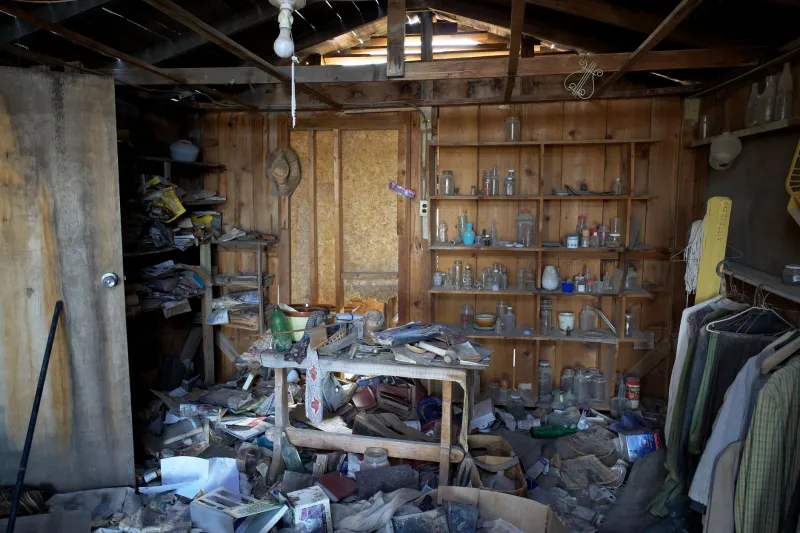
The Room That Knows All Your Secrets
You know the one. The yoga mat rolled up behind the door since 2021. The watercolor set with dried-up pans you keep meaning to rehydrate. The ukulele with a cracked tuning peg sitting on top of a box of untouched polymer clay. If you walked a stranger through that space, you'd probably crack a joke about it. "My hobby graveyard," you'd say, laughing a little too quickly.
But honestly? It's not that funny when you're alone with it. There's something heavier going on — a quiet accumulation of not just stuff, but of stories about who you thought you'd become and didn't, at least not yet. And that weight is worth examining, because it affects more than just your square footage.
Why We Can't Just Donate the Dang Watercolors
Here's the thing: getting rid of abandoned hobby supplies isn't just a logistics problem. It's an emotional one. When we buy into a hobby, we're not just purchasing gear — we're purchasing a version of ourselves. The person who paints on Sunday mornings. The person who finally learns to play guitar. The person who makes their own candles and gives them as gifts at the holidays.
When the hobby fades, the supplies stick around as physical proof that the dream didn't pan out. Donating the watercolors feels weirdly close to admitting defeat. Tossing the half-finished scrapbook feels like erasing something that mattered. So instead, we keep it all — and then feel low-key bad every time we see it.
Psychologists call this kind of object attachment "sunk cost thinking" applied to identity. We've invested not just money, but hope and self-image into these items. Releasing them requires us to separate our sense of self from what we tried and stepped away from. That's genuinely hard, even when the rational part of your brain is screaming at you to just list it on Facebook Marketplace.
The Shame Spiral Nobody Talks About
Here's the cycle that a lot of hobbyists quietly live in: You see the knitting needles. You feel a flicker of guilt. You tell yourself you'll get back to it. You don't. You see the knitting needles again. The guilt compounds. Repeat for eighteen months.
This shame spiral is exhausting, and it does real damage to your relationship with hobbies in general. When abandoned gear becomes associated with personal failure, it starts to color how you approach new interests. You become more hesitant to try things. You second-guess whether you'll "really stick with it this time." The graveyard in your home starts to haunt your future before you've even begun.
The fix isn't to get tougher on yourself. It's to reframe what a "failed" hobby actually means.
Abandoning a hobby doesn't mean you failed at it. It means you explored something, gathered what you needed from it, and moved on. That's not failure — that's how curious people live. The watercolors taught you something. The ukulele gave you a few weeks of genuine joy before life got complicated. That's worth something, even if the next chapter doesn't include them.
Practical Ways to Clear the Clutter (Without Feeling Like a Quitter)
Once you've made peace with the idea that letting go is okay, here are some ways to actually do it:
Do a "last look" ritual. Before donating or selling anything, give yourself ten minutes with it. Hold the guitar. Flip through the scrapbook. Let yourself feel whatever comes up, then make a conscious decision. This sounds a little woo, but it genuinely helps close the loop emotionally.
Find it a good home with intention. Gear that goes to someone who'll actually use it is easier to release. Post it in hobby-specific Facebook groups or subreddits. Offer craft supplies to a local school or community center. Knowing your stuff is going somewhere meaningful takes the sting out of letting go.
Keep one small token, ditch the rest. You don't have to erase the whole chapter. Keep one sketchbook, one favorite brush, one small reminder — and release everything else. This lets you honor the interest without hoarding the infrastructure.
Reassign the space with purpose. Once the gear is gone, don't let the space sit empty and melancholy. Set it up for something new, even if you don't know yet what that is. A cleared-out shelf is an invitation. A corner with good lighting is a possibility. Give the space a new identity so it stops being the place where hobbies go to die and starts being the place where they begin.
The Hive Perspective
At HobbyHive, we talk a lot about the joy of picking things up. But there's just as much value in knowing how to put them down cleanly. A life full of genuine curiosity means you're going to accumulate some evidence of things that didn't stick. That's not a character flaw — it's proof that you keep trying.
The goal isn't a perfectly curated hobby life with no loose ends. The goal is to not let the loose ends strangle your enthusiasm for what's next. Clear the graveyard. Not because those hobbies didn't matter, but because you do.