Why You Always Quit Right Before It Gets Good: The Intermediate Trap in Hobbies
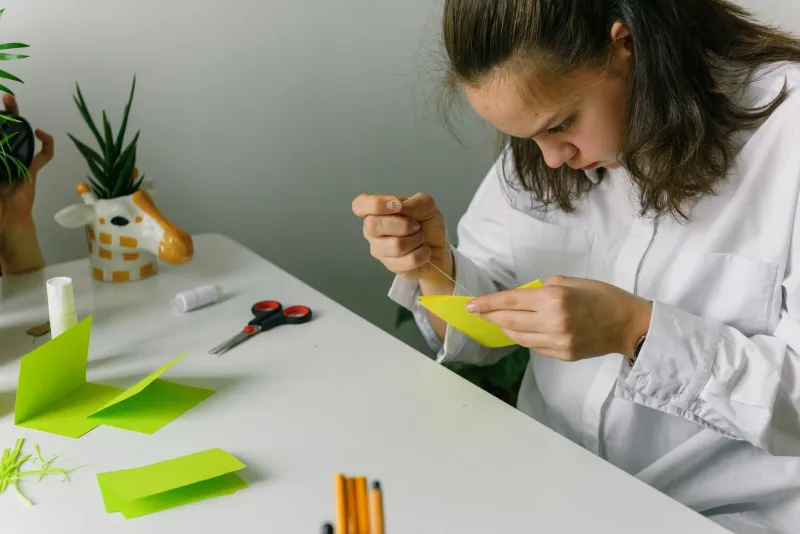
If you've ever found yourself staring at a dusty ukulele, an unfinished resin project, or a half-assembled model kit you were totally going to finish, you're not alone. There's a pattern a lot of hobbyists fall into without ever realizing it — and it's not about laziness, lack of discipline, or being a "quitter." It's about the psychology of skill development, and it's way more common than anyone talks about.
Let's call it the Intermediate Trap.
What the Intermediate Trap Actually Looks Like
Here's how it usually goes: You pick up something new — let's say watercolor painting. The first few weeks are electric. Everything is fresh, you're making real progress, and every little win feels huge. Then, somewhere around the two-to-four-month mark, the energy starts to flatten. You're no longer a total beginner, but you're not good yet either. The gap between what you can do and what you want to do feels enormous.
So you start eyeing that embroidery kit you bookmarked last month.
This is the moment. And for a lot of us, we bail — not because watercolor was wrong for us, but because the intermediate phase is genuinely uncomfortable. Neuroscientists call this the "learning plateau," and it's a real cognitive phenomenon. Your brain got its dopamine hit from early progress, and now that progress has slowed, the reward circuitry quiets down. It feels like the hobby stopped being fun. In reality, you just outgrew the beginner phase.
The Difference Between Pivoting and Self-Sabotaging
Now, before we go further — not every hobby switch is a red flag. Hobby coaches (yes, that's a real and growing profession in the US) are quick to point out that authentic pivoting and self-sabotaging cycles can look almost identical from the outside. The difference is internal.
A healthy pivot usually comes with a sense of completion or genuine incompatibility. Maybe you tried woodworking and discovered you genuinely hate the dust and noise. That's real information. Moving on makes total sense.
A self-sabotaging restart, on the other hand, tends to happen right at the moment things get hard — not boring, not wrong, just hard. If you look back at your hobby history and notice a pattern of abandoning things at roughly the same skill level, that's worth paying attention to. The hobbies change, but the exit point stays suspiciously consistent.
Some hobby coaches refer to this as "beginner chasing" — the unconscious habit of seeking out the high of being a new learner over and over, because that phase is full of fast, visible wins. It feels productive. It feels exciting. But it keeps you from ever knowing what it's like to be genuinely skilled at something.
Why the Beginner Phase Is So Addictive
There's a reason beginner content dominates YouTube, Reddit, and every corner of the internet. "I tried X for 30 days" videos get millions of views. "How I got to intermediate level after three years" videos? Not so much.
Our culture is obsessed with the start. And that's not entirely bad — lowering the barrier to entry for hobbies is genuinely great. But it does create an environment where the intermediate phase feels like a failure state rather than a sign of real growth.
Hobby coaches who work with clients on this specific issue often start by asking one question: What would this hobby look like if you stuck with it for two full years? Most people have never even imagined it. They've always exited before that point.
That question alone can shift something. Because when you actually picture yourself two years in — more skilled, more confident, maybe part of a community of people who've put in the same time — it starts to feel worth pushing through the plateau.
How to Know If You're Stuck in the Cycle
Here are a few honest questions to ask yourself:
- Do your hobby phases tend to last roughly the same amount of time? Three months, six months — whatever your number is, a consistent exit window is a clue.
- Do you feel more excited about starting a new hobby than continuing an existing one? The anticipation of beginning is part of the rush.
- Do you tell yourself you'll "come back to it later" and genuinely believe it? Most of us know, deep down, when that's true and when it's a polite fiction.
- Have you ever pushed through a plateau and experienced what's on the other side? If not, you may not have a real reference point for what sticking around actually feels like.
None of these questions are about shame. They're diagnostic. The goal is honest self-awareness, not self-criticism.
Getting Unstuck: Practical Ways to Push Through
If you recognize yourself in any of this, here are a few things that actually work:
Set a "no new hobbies" window. Give yourself 90 days where you commit to not starting anything new. This removes the escape hatch and forces you to sit with the discomfort of the intermediate phase. A lot of people are surprised to find that the discomfort passes.
Find community at your level. One of the biggest reasons people quit at the intermediate stage is isolation. Beginners have tons of resources. Advanced practitioners have mentors and peers. Intermediate hobbyists often feel like they're in no-man's-land. Seek out communities — on Discord, Reddit, or in person — that specifically welcome people at your level.
Reframe what progress looks like. In the beginner phase, progress is obvious. In the intermediate phase, it's subtler. Start tracking things differently — not "I finished a project" but "I noticed I made a decision I wouldn't have made six months ago." That's real growth, even when it's invisible.
Talk to someone who's been where you are. Whether that's a hobby coach, a mentor in your community, or just someone in an online forum who's been at this longer than you — hearing that the plateau is normal and temporary can make a real difference.
The Thing Nobody Tells You About Going Deeper
Here's what's waiting on the other side of the intermediate trap: a version of your hobby that's richer, more personal, and more rewarding than anything you experienced in the beginner phase. The relationships you build with fellow hobbyists at that level are different. The satisfaction of a finished project is different. Even the failures feel different — more instructive, less discouraging.
The beginner phase is exciting. But mastery — even partial mastery — is something else entirely. You just have to get through the awkward middle to find out.
And if you've got a dusty ukulele somewhere in your house? Maybe give it one more shot.