Why Your Brain Actually Wants You to Have More Than One Hobby
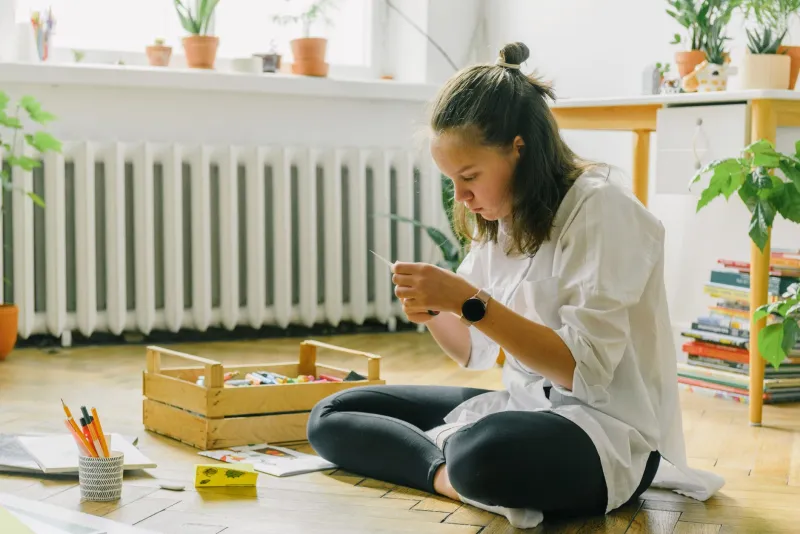
There's a certain kind of hobbyist pride that comes with going all-in. You know the type — maybe you are the type. One passion, one community, one deep rabbit hole that consumes every free hour. It feels like commitment. It feels like mastery. And honestly? It feels a little noble.
But here's the thing: your brain might be quietly suffering for it.
Neuroscience and psychology research increasingly point to something hobbyists have been discovering on their own for years — that cycling through a varied mix of interests isn't scattered or unfocused. It's actually one of the healthiest things you can do for your mind.
The "Playlist" Model of Hobbies
Think about how you listen to music. Most people don't put a single song on repeat for six hours straight. You build a playlist — something with flow, contrast, and variety. Different tempos for different moods. Some tracks you know by heart; others you're still figuring out.
Your hobbies can work the same way.
When you treat your interests like a curated collection rather than a singular obsession, something interesting happens. Each activity starts feeding the others. The patience you develop in fly fishing shows up in your woodworking. The spatial reasoning you sharpen in jigsaw puzzles bleeds into your photography compositions. The creativity you flex in watercolor painting starts influencing how you approach problems at work.
Psychologists call this kind of cross-domain benefit "transfer learning" — and it's a big deal.
What Happens in Your Brain When You Switch It Up
Every time you pick up a new or different hobby, your brain is doing some heavy lifting. Novel activities stimulate the production of dopamine, the neurotransmitter associated with motivation and reward. They also activate neuroplasticity — your brain's ability to form new connections and reorganize itself.
When you're always doing the same thing, even something you love, the novelty wears down. Dopamine responses flatten. What once felt exciting starts feeling routine. This is a big part of why even passionate hobbyists hit walls — not because they've fallen out of love with their craft, but because their brain has adapted to it and stopped firing on all cylinders.
Switching to a different hobby — even temporarily — essentially resets that cycle. You're giving your brain a new problem to solve, a new skill to encode, a new source of reward. Then when you come back to your primary passion, it often feels fresh again.
Researchers at institutions like the University of California have found that engaging in creative activities outside of work (and by extension, outside of a dominant hobby) is linked to higher performance, more innovative thinking, and better emotional regulation. That's not a small thing.
The Burnout Buffer
If you've ever pushed too hard on a single hobby and felt it start to hollow out — that creeping sense of obligation where something that used to be fun now feels like a chore — you've experienced passion fatigue firsthand.
Hobbyists who maintain multiple active interests tend to report lower rates of this kind of burnout. Why? Because they have somewhere to go when one thing stops sparking joy. Instead of grinding through the low-energy phase of a single hobby and risking a full break from it, they can rotate. They give one passion room to breathe while staying engaged elsewhere.
It's the difference between burning through a candle and knowing when to blow it out and let it reset.
"But Won't I Get Less Good at Everything?"
This is the pushback you'll hear most often, especially in hobby communities where depth and mastery are deeply valued. And it's a fair concern — up to a point.
The truth is, most hobbyists aren't gunning for professional-level mastery. They're chasing engagement, growth, and joy. And within that context, breadth doesn't undermine depth — it often enables it.
There's a concept in skill development called "interleaving" — where practicing multiple related (or even unrelated) skills in rotation actually leads to better long-term retention than drilling a single skill repeatedly. Your brain consolidates information more effectively when it's forced to retrieve and contrast, rather than just repeat.
In plain terms: the hobbyist who knits, hikes, and tinkers with electronics might actually get better at each of those things faster than someone who only does one of them — because the variety keeps the learning process active and engaged.
Building Your Own Hobby Playlist
So how do you actually put this into practice without feeling like you're just flailing between interests?
A few approaches that real hobbyists in communities like ours have found useful:
Anchor + Explore. Keep one "anchor" hobby — the one you're most invested in — but deliberately maintain one or two "explorer" hobbies that you rotate through more casually. The anchor gives you depth and identity; the explorers give your brain novelty and contrast.
Seasonal Rotation. Some people naturally shift their hobbies with the seasons — outdoor photography in summer, model building in winter, gardening in spring. This kind of rhythm isn't random. It mirrors how humans have always lived in relationship with cycles and change.
Skill Pairing. Look for hobbies that complement each other in unexpected ways. A knitter who picks up origami is developing the same fine motor precision and pattern recognition from a totally different angle. A home brewer who starts growing their own hops is connecting chemistry with horticulture. These pairings amplify each other.
Low-Commitment Dabbling. Not every hobby needs to be a full investment. Keeping a sketchbook when you're primarily a musician, or trying a free beginner pottery class when you're mainly a cyclist — these low-stakes experiments keep your brain curious without derailing your primary passions.
The Satisfaction Factor
Beyond the neuroscience, there's something simpler at work here: people who let themselves enjoy multiple hobbies tend to feel better about their leisure time overall.
When your entire recreational identity is wrapped up in one thing, every slump in that hobby feels like a personal failure. You question whether you really love it. You wonder if you should quit. You put pressure on a single activity to deliver all of your fun, all of your community, and all of your sense of accomplishment.
That's a lot to ask of anything.
Spread that across three or four interests, and suddenly no single one has to carry the whole weight. You can let a hobby be imperfect, or slow, or temporarily frustrating — because you've got other things going on that are firing well right now.
That's not a lack of commitment. That's a sustainable relationship with the things you love.
The Hive Mentality
There's a reason HobbyHive is built around the idea of many interests coexisting in one space. Hobbies aren't competitions for your attention — they're collaborators. The more you let them talk to each other, the richer your creative and mental life becomes.
Your brain isn't wired for monotony, even enjoyable monotony. It's wired for exploration, challenge, and the particular satisfaction of getting better at something new. Give it a playlist worth playing.