Your Hobby Has an Expiration Date — And That's Actually a Good Thing
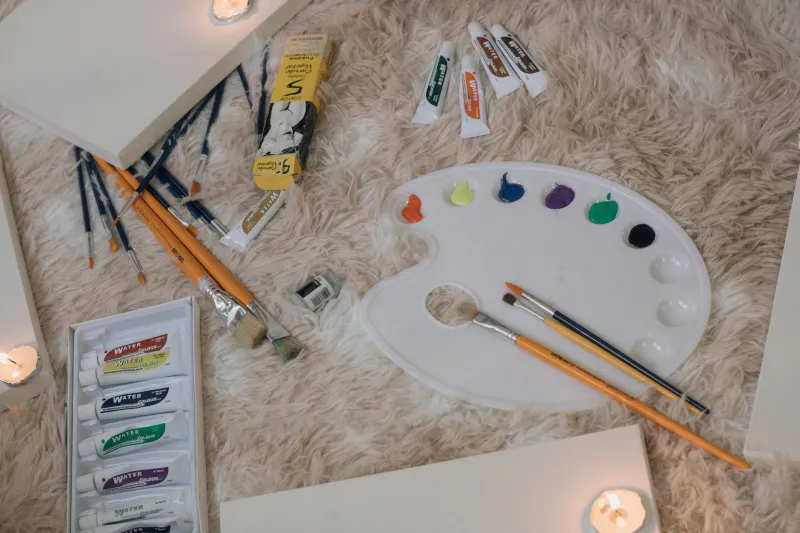
You know the drill. One day you're deep in a YouTube rabbit hole about sourdough starters, spending $80 on a banneton basket and a bag of specialty flour. Six months later, that basket is collecting dust next to the ukulele you were definitely going to master and the watercolor set that never made it past the first tutorial. Sound familiar?
Here's the thing nobody tells you at the start of a new hobby obsession: it might not last. And honestly? That's completely fine.
The 18-Month Itch
Psychologists and hobby researchers have been quietly tracking how long people maintain active engagement with new interests, and the numbers are pretty telling. While there's no single universal study that nails down an exact figure, behavioral researchers who study leisure patterns consistently find that the intense, honeymoon phase of a new hobby — what some call "peak engagement" — typically runs somewhere between 12 and 24 months, with 18 months being a rough middle ground for a lot of people.
Dr. Jaime Kurtz, a positive psychology researcher who has written about leisure and happiness, has noted that novelty plays a huge role in how much joy an activity brings us. When something is new, our brains are flooded with dopamine. We're learning constantly, hitting small wins, and everything feels exciting. But as competence grows and the learning curve flattens out, that neurological reward naturally tapers off.
In other words, your brain isn't broken. It's just... done with the beginner's high.
Why We Guilt-Trip Ourselves for Moving On
American culture has a complicated relationship with quitting. From Little League coaches to motivational posters in middle school hallways, we're raised to equate sticking with something as a virtue and moving on as weakness. That narrative bleeds hard into how we think about hobbies.
There's a persistent myth in most hobby communities that the real enthusiasts are the ones who've been doing it for decades. The guy who's been into model trains since 1987. The woman who's knitted every single day for thirty years. These are the people held up as the gold standard — and everyone else quietly feels like a tourist.
But here's what that framing misses entirely: those lifers are the exception, not the rule. And their dedication, while genuinely admirable, isn't the only valid relationship a person can have with a passion.
Marcus Webb, a 34-year-old graphic designer from Austin, Texas, has cycled through at least eight distinct hobby phases over the past decade — including amateur astronomy, vinyl record collecting, urban sketching, and, most recently, competitive disc golf. "I used to feel so embarrassed when I'd lose interest," he says. "Like I was failing at having a personality. But looking back, every single one of those hobbies taught me something real. I'm a better visual thinker because of the sketching. I'm more patient because of astronomy. The disc golf is probably temporary too, and I'm okay with that now."
The Curiosity Loop: What the Science Actually Says
Researchers who study intrinsic motivation — the internal drive to do something for its own sake — describe something called the "curiosity loop." Curiosity spikes when we encounter something new and unfamiliar. We explore, we learn, we gain competence. And then, once mastery feels within reach or actually achieved, curiosity naturally seeks out the next frontier.
Far from being a character flaw, this loop is associated with higher creativity, better adaptability, and even improved mental health outcomes. People who regularly engage with new interests tend to show greater cognitive flexibility — the ability to shift thinking between different concepts — compared to those who stay rigidly focused on a single domain.
So that pile of abandoned hobbies in your closet? It might actually be evidence of a healthy, curious mind doing exactly what it's supposed to do.
The Seasonal Hobbyist Is a Legitimate Thing
Not every interest has to be a lifelong commitment. Some people are what you might call "seasonal hobbyists" — they cycle through interests with the rhythm of a year, revisiting some and letting others go for good. Think of it less like a marriage and more like a really good book series. You might not reread every volume, but you're glad you read them.
Jennifer Okafor, a 41-year-old nurse from Columbus, Ohio, describes herself exactly this way. "I do something intensely for a while, then I step back. I did ceramics for about a year and a half, took a break, and came back to it two years later with fresh eyes. That gap actually made me better at it because I wasn't burned out."
That concept — stepping away and returning — is something researchers call "incubation," and it's well-documented in creative fields. Distance from a skill can allow unconscious processing to continue, meaning you sometimes come back better than when you left.
Reframing the Abandoned Hobby Pile
Next time you look at that dusty guitar or unopened embroidery kit, try shifting how you interpret it. That's not a monument to your lack of follow-through. That's evidence of a life lived with genuine curiosity. You tried something. You were brave enough to be a beginner. You got what you needed from it, and then you moved on.
The hobbyists who thrive long-term — the ones who stay genuinely enthusiastic about leisure and personal growth — aren't always the ones who stick with one thing forever. Often, they're the ones who give themselves permission to explore widely, follow their energy honestly, and trust that the next obsession is already on its way.
So go ahead. Let the sourdough starter go. The ukulele had its season. Something new is waiting — and you've got about 18 months to fall completely in love with it.