Trade What You Know: The Case for Swapping Skills with Fellow Hobbyists
There's a moment most hobbyists know well. You're forty-five minutes deep into a tutorial, the instructor just said something you didn't quite catch, and you've rewound the same ten-second clip six times. You're learning, technically. But you're also completely alone with your confusion, and nobody's coming to rescue you.
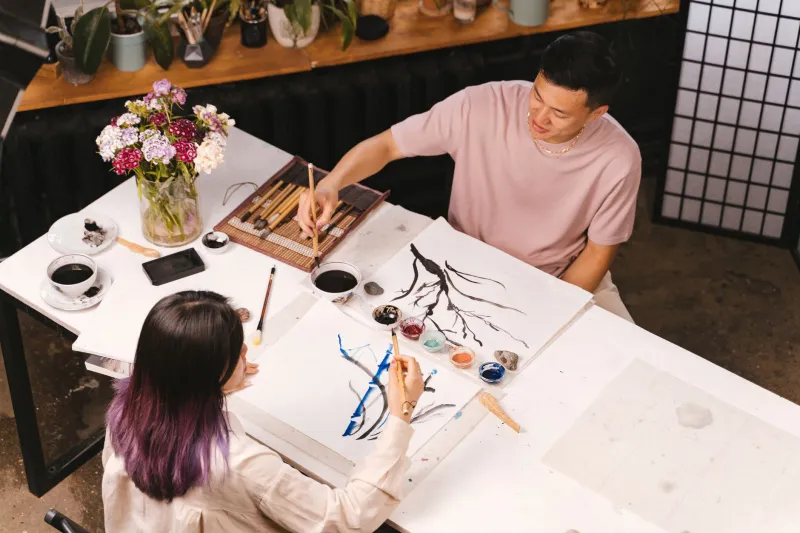
Now imagine instead that you're sitting across from someone who picked up that exact skill three years ago — someone who remembers exactly where it clicked for them, who can watch your hands and tell you what you're doing wrong in real time. That's the promise of skill swapping, and hobbyists across the country are catching on to it in a big way.
What Skill Swapping Actually Looks Like
At its simplest, a hobby skill swap is just two people agreeing to teach each other something they each already know. A watercolor painter helps a woodworker understand color theory and composition. The woodworker shows the painter how to build a proper storage rack for their supplies. Both people walk away with something they didn't have before, and neither one paid a dime for a class.
But it goes way beyond one-on-one trades. Local maker spaces, community centers, and online groups have started organizing informal skill exchange nights — think speed dating, but everyone's trying to learn how to throw pottery or tune a guitar. Reddit communities and Discord servers built around specific hobbies have threads dedicated entirely to "I'll teach you X if you teach me Y" posts. The infrastructure for this kind of exchange has quietly been building for years.
What makes it different from just watching someone's content online isn't just the interaction — it's the accountability. When a real person is showing up to teach you something, you actually show up to learn it.
Why Peer-to-Peer Learning Hits Different
There's a concept in education research called the protégé effect — the idea that teaching something to someone else actually deepens your own understanding of it. When you explain why you do something a certain way, you're forced to articulate instincts you've never had to put into words. Suddenly, you understand your own craft better than you did before you opened your mouth.
This is one of the underrated gifts of skill swapping. Both people in the exchange are learning. The person receiving instruction gets hands-on guidance. The person giving it gets to stress-test and solidify their own knowledge. It's a genuinely two-way transaction, which is something formal lessons rarely achieve.
There's also the question of relevance. A professional instructor teaching a general class has to cover the fundamentals for everyone in the room. A fellow hobbyist who knows your specific goals can skip straight to what you actually need. If you've been crocheting for two months and you're stuck on a particular stitch pattern, you don't need Lesson One — you need someone who's been exactly where you are.
The Community Glue Nobody Talks About
Here's something the solo-learning crowd misses: hobbies are more fun when other people are genuinely invested in your progress. When you've swapped skills with someone, you've created a relationship that has texture to it. You've been vulnerable about what you don't know. You've been generous about what you do. That's a foundation for real community, not just a follower count.
Long-time hobbyists will often tell you that the people they met early on — the ones who showed them the ropes in person — are still part of their lives years later. There's something about learning alongside someone, or from someone who genuinely wants you to succeed without any financial stake in it, that creates a different kind of bond.
This is especially true for hobbies that can feel gatekept or intimidating from the outside. When someone who's already inside a hobby community reaches out a hand and says "let me show you what I know," the whole culture of that hobby shifts a little. It becomes more welcoming. More human.
How to Find Your Swap Partner
You don't need to wait for an organized event to make this happen. Start by taking stock of what you actually know. Even if you're a beginner in your primary hobby, you almost certainly have skills from other areas of your life that someone else would love to learn. Basic photography? Home cooking techniques? Knowing your way around a spreadsheet? All of that is tradeable.
Then look at where your hobby community already lives. Facebook groups, Meetup.com events, local guild meetings, subreddits — these are all places where you can post something simple: "I'm learning X and I'm pretty decent at Y. Anyone want to swap some time?" You might be surprised how quickly someone responds.
If you're more introverted or just prefer to start small, even a single video call with someone from an online community can be a version of this. Share your screen. Walk each other through something. It doesn't have to be a formal arrangement to be valuable.
Making It Work Long-Term
Skill swaps work best when both people are honest about expectations upfront. How often will you meet? What specifically are you each hoping to learn? Is this a one-time exchange or an ongoing thing? Treating it with even a small amount of intentionality — like you would a class you'd actually paid for — keeps both people engaged and prevents the whole thing from fizzling out after the first session.
It also helps to document your progress together. Take notes. Share photos. Check in between sessions. The accountability factor is one of the biggest advantages of this kind of learning, so lean into it rather than letting it go casual to the point of disappearing.
At the end of the day, the hive works because everyone brings something. That's not just a nice metaphor — it's actually the most efficient and joyful way to grow inside any hobby you care about. Stop learning alone when you don't have to.