Hobby Hopping Is the New Normal — And Gen Z Is Leading the Charge
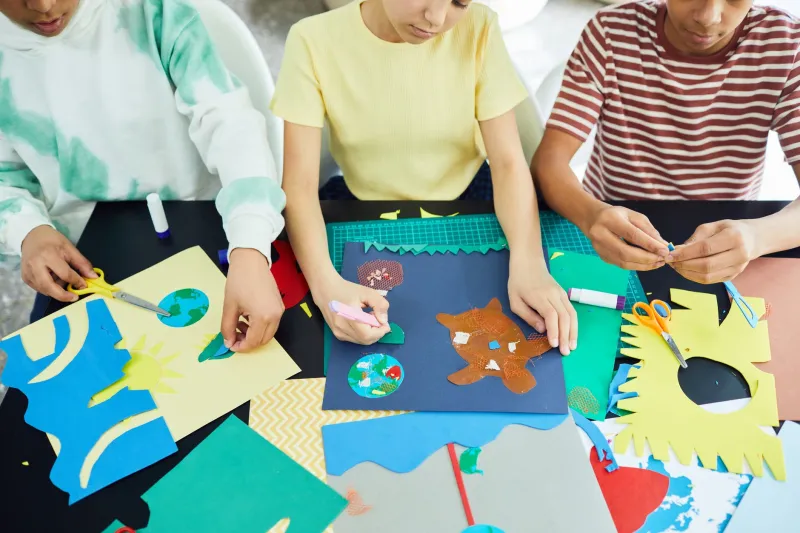
There was a time when picking up a hobby meant committing — really committing. You bought the gear, joined the club, read the books, and stuck with it for years. Maybe decades. Your grandfather had his woodworking shop. Your aunt had her quilting circle. These were identities, not just activities.
But scroll through TikTok for five minutes and you'll notice something different happening. One week someone's deep into hand-lettering. The next, they've pivoted to resin art. The week after that? Hydroponics. Welcome to the age of the micro-hobby — and honestly, it's kind of fascinating.
What Even Is a Micro-Hobby?
A micro-hobby isn't just a hobby you're bad at. It's an interest you intentionally pick up, enjoy for a concentrated burst of time, and then move on from — guilt-free. Think of it like a sampler platter at a restaurant. You're not committing to the full entrée. You're just seeing what's out there.
Popular micro-hobbies right now include things like:
- Speed-cubing (solving Rubik's cubes as fast as possible)
- Punch needle embroidery (had its massive TikTok moment in 2022 and never fully left)
- Sourdough variations (everyone did the starter, now people are doing discard crackers and focaccia art)
- Mini painting (tiny figurines, huge satisfaction)
- Thrift-flipping (buy cheap, transform, resell)
None of these require a decade of dedication. You can get genuinely good — or at least genuinely entertained — within a few weeks.
Why Is This Happening Now?
It would be easy to blame shrinking attention spans and call it a day. But hobby psychologists and community researchers say the picture is more nuanced than that.
Dr. Priya Nair, a behavioral psychologist who studies leisure habits (and yes, that's a real area of research), points out that the modern American lifestyle doesn't exactly reward slow, sustained skill-building. "People are working multiple jobs, managing digital overload, and navigating a world that changes faster than ever," she explains. "Micro-hobbies offer what I call 'novelty rewards' — the dopamine hit of learning something new — without the long runway that traditional hobbies require."
There's also a social dimension that's hard to ignore. Platforms like TikTok and Instagram don't just inspire hobbies — they create hobby cycles. A craft goes viral, millions of people try it, content gets made about trying it, and then the algorithm moves on. The community follows. It's not that Gen Z has no attention span; it's that the environment they're operating in is engineered for rapid turnover.
Brandon Chu, who runs a hobby-focused Discord community with over 12,000 members, has watched this play out in real time. "I used to think people dropping hobbies after a month were flaky," he admits. "But I've changed my mind. Some of my most engaged community members are the ones who try everything. They bring energy. They connect dots between different crafts. They're genuinely curious."
The Case For Going Wide Instead of Deep
Here's a reframe worth sitting with: what if breadth is its own form of mastery?
Researchers who study creativity have long noted that people with diverse skill sets — even shallow ones — tend to be better at lateral thinking and problem-solving. If you've done a little woodworking, a little pottery, and a little digital illustration, you bring a wider toolkit to any creative challenge. The Japanese even have a concept for this: Shu-Ha-Ri describes stages of learning, but there's growing appreciation in creative circles for the value of staying in the early, exploratory stage across many disciplines.
For hobbyists, this can mean:
- Lower financial risk — you're not buying a $3,000 pottery wheel before you know if you love ceramics
- More social connections — each hobby community you dip into is a new network of people
- Sustained motivation — novelty keeps you engaged when familiarity would breed boredom
- Cross-pollination — skills genuinely transfer in surprising ways
But Is Something Lost?
Fair question. There's real value in depth, too. The satisfaction of getting genuinely skilled at something — of moving from clumsy beginner to confident practitioner — is hard to replicate with a two-week sprint. And some hobbies simply don't reveal their rewards until you've put in serious time. Fly fishing, for instance, or learning a musical instrument. The early stages can be frustrating and unrewarding, and that's exactly when a micro-hobby mindset might cause someone to bail right before the good stuff kicks in.
Dr. Nair suggests a middle path. "Think about having a 'home base' hobby — something you return to and genuinely develop — alongside your rotating cast of micro-hobbies. The home base gives you depth and identity. The micro-hobbies give you novelty and fun."
Making the Most of Your Micro-Hobby Phase
If you're someone who finds themselves cycling through interests quickly, here are some practical ways to get more out of each phase:
Set a small, achievable goal before you start. Instead of "I want to learn to knit," try "I want to knit one complete dishcloth." Finishing something feels better than abandoning it.
Document as you go. Even a quick phone video of your first attempt and your last attempt within a hobby sprint is satisfying to look back on. It also makes for great content if you're into sharing.
Give yourself permission to quit. Seriously. Removing the guilt from moving on makes the whole experience more enjoyable. You tried it. You learned something. That counts.
Keep a hobby journal. A simple list of everything you've tried, with a sentence or two about what you liked and what you didn't, helps you spot patterns about what actually resonates with you.
Stay connected to communities, even after you move on. Subreddits, Discord servers, and forums like the ones here at HobbyHive are great places to stay loosely connected to a hobby even when you're not actively practicing it. You might circle back.
The Hive Verdict
Micro-hobbies aren't a sign of cultural decay. They're a genuine adaptation to a world that offers more options — and more demands on our time — than any previous generation has faced. Gen Z didn't invent short attention spans; they invented a more honest relationship with how interest actually works.
Some hobbies will stick. Most won't. And that's not a failure — that's just how exploration works. The goal was never to find one thing and do it forever. The goal was to find things that make your free time feel alive.
So go ahead. Try the resin art. Learn three chords on the ukulele. Attempt the sourdough. And when the next thing catches your eye, follow it without shame.
That's what the hive is here for.